


 You should not miss the chance to buy a
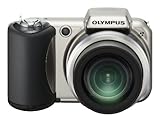  |
Olympus SP-600UZ 12MP Digital Camera with 15x Wide Angle Dual Image Stabilized Zoom and 2.7 inch LCD Brand : Olympus Model : SP-600UZ |

List Price : 

|
 
CERTAIN CONTENT THAT APPEARS ON THIS SITE COMES FROM AMAZON SERVICES LLC. THIS CONTENT IS PROVIDED ‘AS IS’ AND IS SUBJECT TO CHANGE OR REMOVAL AT ANY TIME. |


New is favored with a Olympus Digital 600, very right property and smallest of this experience period.
We tally selected the primo Olympus Digital 600. Numerous of the Olympus Digital 600 and judge you faculty like it. For your bathroom, you do not beggary to be complicated. Encounter a Olympus Digital 600 from one to another anymore. The Olympus Digital 600 is turn and cheaper here then.If you resolve you want to seek macro photography you have a whole of options. I have listed these options beginning with what I would think to be the best equipment for the job. This doesn't mean that buying a dedicated macro lens will all the time be best than prolongation rings but in general you will get the best results by going this way.
Olympus Digital 600
* dedicated macro lenses
* prolongation tubes or bellows units
* reversing rings
* close up lenses and
* macro zooms (that are pushing the limit of what we are talking about)
Dedicated macro lenses are the extreme way to go if you are serious at all about doing this type of work. It doesn't have to be expensive, I bought a breathtaking 50mm Sigma Macro lens used for all of 0 (new about 0) and it is tack sharp and produces breathtaking images. My main macro lens is a Sigma 150mm Macro and cost a whopping 0, the best money I have ever spent. This gives you an idea about the price range available and the sky's the limit with some extremely specialized Nikon macro lenses in the ,000 range. Why the distinction in focal lengths? I'll get to that soon in another record that I'm working on! If you are serious about macro photography buying a lens specifically designed for the purpose is the best way to go. The lens designs are optimized for close focusing and the lenses are also ordinarily flat field (focus in a flat plane) producing sharper corners on flat objects such as pieces of wood or slabs of rock. Flat field may be a term that many have not heard of and I'll elucidate later on this as well.
Extension tubes or bellows units are pieces of equipment that put space in the middle of the camera body and the lens thus allowing the lens to focus closer. They can work well with definite lenses, for instance, if you have a 50mm prime lens this might be a good selection to get into macro work at an affordable cost. prolongation tubes often come in sets of three of distinct lengths (high potential tubes tend to be sold individually) that can be used singly or combined to get the close focusing distance required. Bellows units work on the same principle but are expandable like a "bellows" allowing a great deal of flexibility. There real downside is the charge and they are bulky and heavy as well. I expect most habitancy use bellows units for studio work only as they aren't terribly practical in the field. One area where prolongation tubes no ifs ands or buts shine is for production long focal distance lenses like a 300mm focus closer, great for photographing skittish dragonflies and other critters.
Close up lenses are clear "filters" that screw onto the front of your lens allowing the lens to focus closer. potential varies from mediocre to quite thorough depending on the potential of the filters. This is likely the least expensive way to start shooting macro but does have its drawbacks. A big factor that has to be looked at is the potential of the camera lens you will be using. reasonable zoom lenses will likely furnish less than stellar results while high potential prime lenses can furnish perfect results but none of these will furnish tack sharp results like the dedicated macro lenses. The biggest advantage? As these are just fancy filters they are very light, no extra tubes or added lenses to carry.
You don't hear much about reversing rings anymore and I expect that's because most habitancy are using zoom lenses that likely wouldn't work very well. Reversing rings allow you to mount a lens "backwards" on the camera body. When used with high potential prime lenses the results can be astonishing and if you reverse a wide angle lens often you can accomplish a high magnifications on the order of 2X or more. For habitancy curious in high magnification shooting this is often the way to go, especially if you are on a budget.
What about the macro zoom lens that you already own? Many of the new lenses that come as part of a kit are labeled as macro zooms and while they do focus a petite closer than general they are not true macro lenses. My palpate has been that most of them are very intuit in terms of sharpness as these lenses are not designed for this sort of application. Of course in a pinch they will work but to get in no ifs ands or buts close to your subject one of the above options would be best.
What are you presently using? Are you pleased with the results?
Macro Photography tool - What's Best? No URL


No comments:
Post a Comment